
Number go up
What do we with our desire?
[AKA “The Three-Banana Problem.” One of the longest and less-hinged tracts I’ve written, not an essay so much as three essays huddled under a trench coat. Enjoy!]
In the summer of 2005, my parents and older brother left town to tour colleges before the start of his senior year. My sisters went to stay with a nearby family, who were known for their superlative cooking. I could have gone with them, but decided to stay home by myself instead. I remember vibrating with excitement as I watched the car pull out of the driveway on Saturday morning, because while everyone else was gone, I could play RuneScape as much as I wanted.
And so I played, nearly continuously for the next thirty hours. I didn’t sleep. I barely moved. I just sat at the tiny desk in the corner of the dining room where my mother’s laptop lived, jaw slack, eyes unblinking, gnawing at a huge slab of Trader Joe’s chocolate like a zombie savoring yesterday’s brains, rising only to use the bathroom or boil water for tea. Twenty hours in, my stomach seizing after failing to parse nutrients from a slurry of caffeine and sugar, I left home briefly to suck down two bowls of curry at our community center up the road. Only after my family returned did I finally relinquish my post—head pounding, eyes stinging—and collapse into bed.
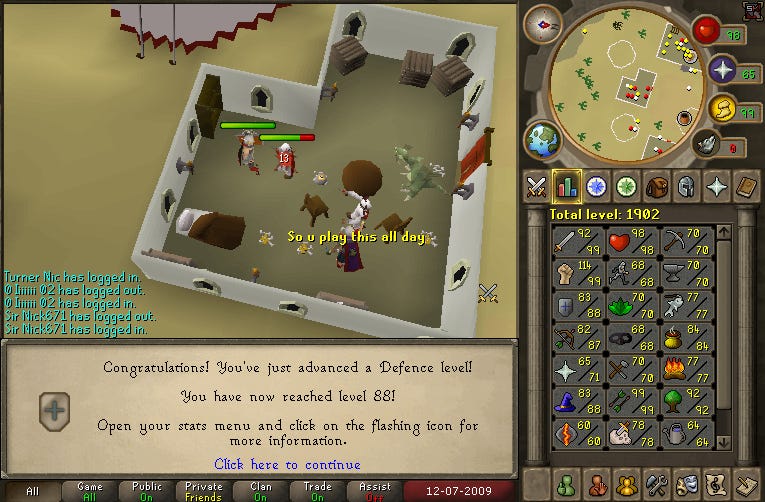
RuneScape is an online game about clicking digital creatures (goblins, dragons, wizards, and such) and then waiting for the bars above their heads to turn from green to red. You can click other things too: click on rocky outcroppings to mine for ore, click ore to smelt into bars, bars to craft into axes, trees to axe into logs, and so on, in an endless loop of interconnected systems. The effectiveness of nearly every click is governed by a numerical skill—one for mining, smithing, woodcutting—and each of these can be leveled from 1 to 99.
Depending on your proficiency as a player, maxing out a single skill can take days, weeks, or even months of dedicated play. With peak efficiency and total knowledge of the game’s systems, it takes about 2,000 hours to level every skill to 99. That’s 83 days—125 if you slept—and given how dull and repetitive the gameplay is, the subjective experience of those days would be much the same as if you simply erased them from your one human life.1
If you’ve never played RuneScape, I envy you. It was the first game I was ever properly addicted to, the majority shareholder of my thoughts and attention from age 10 to 12—and because how we spend our days is how we spend our lives, it’s not really exaggerating to say that it stole almost two years of my adolescence (after which it was usurped by World of Warcraft, which took another two). As I played, my grades plummeted, my social development was, if not arrested, severely warped and diminished, and I mostly stopped reading for school or pleasure. Instead, at every available opportunity, I worshipped at the altar of my mom’s Dell Latitude, my will captured, my mind bent solely upon the augmentation of my virtual self.
People sometimes joke that playing RuneScape is like having a second job. It’s not hard to see why—as I’ve said, the game is violently repetitive, and many jobs are too. Labor researchers sometimes measure the repetitiveness of a job sector by estimating its potential for automation. For example, last month McKinsey published a study estimating that up to 40 percent of all jobs could (“in theory”) be automated out of existence in the next five years due to recent developments in robotics and AI.2
In these terms, you can perhaps grasp the inherent mindlessness of RuneScape even if you haven’t played, given that almost every action in the game has been automated already, and with far more primitive tools. Enthusiasts and entrepreneurs have been programming scripts called “bots” to play the game for them ever since it was released in 2001—subroutines for mining rocks, chopping wood, and auctioning off the produce for digital currency (which—contra the game’s terms of service, but nevertheless—can be flipped for real currency on third-party sites).
I say “play the game,” even though a computer script cannot be said to “play” in any meaningful sense of the word, not beyond its mere interaction with the pulleys and levers of a game interface. If we accept Bernard Suits’ definition of “playing games”—“the voluntary attempt to overcome unnecessary obstacles”—then what a bot lacks is volition, plus the motivation required to provoke it.3 It would be more accurate, then, to say that bots are used to avoid play—or more specifically, to avoid grinding.
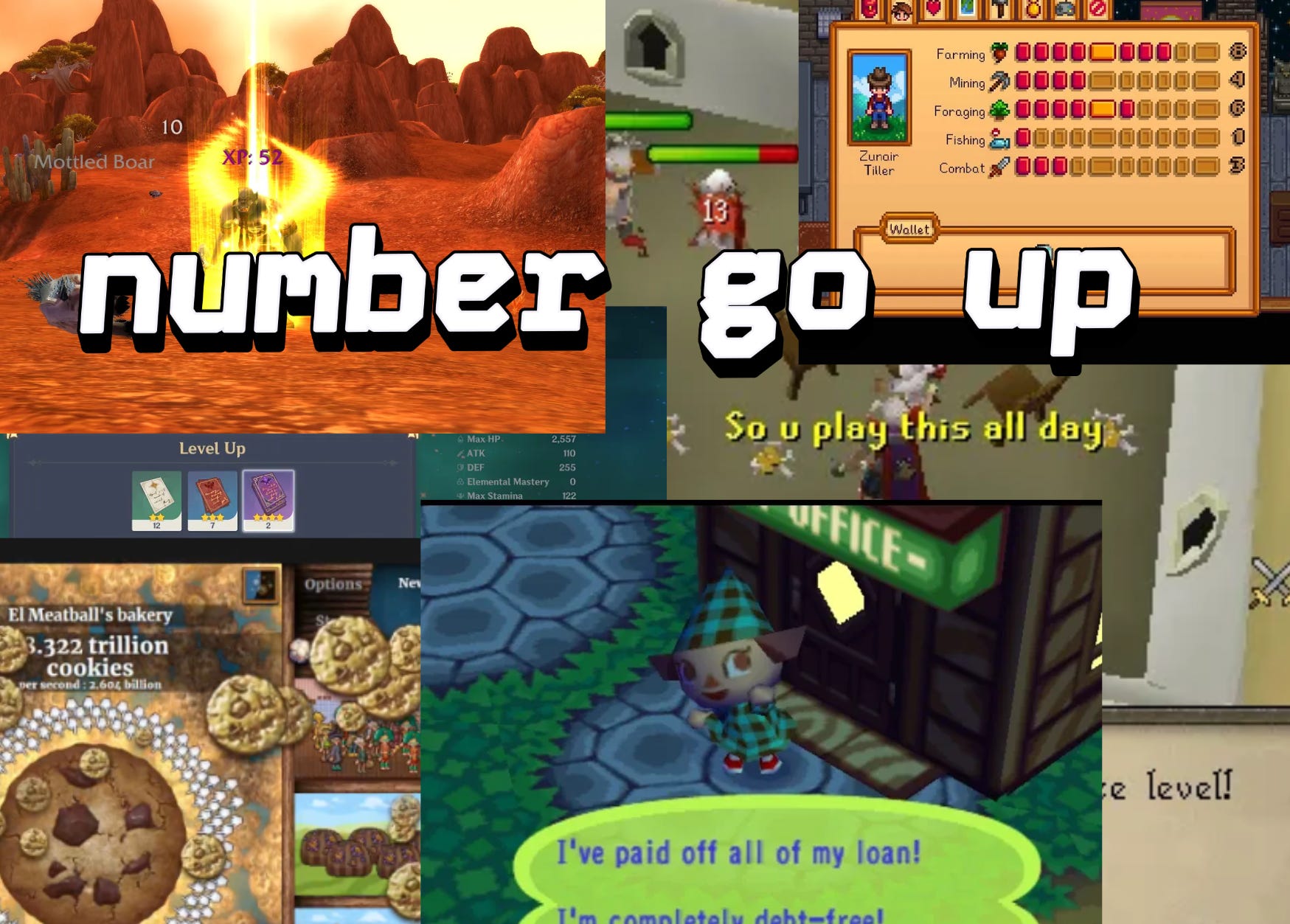
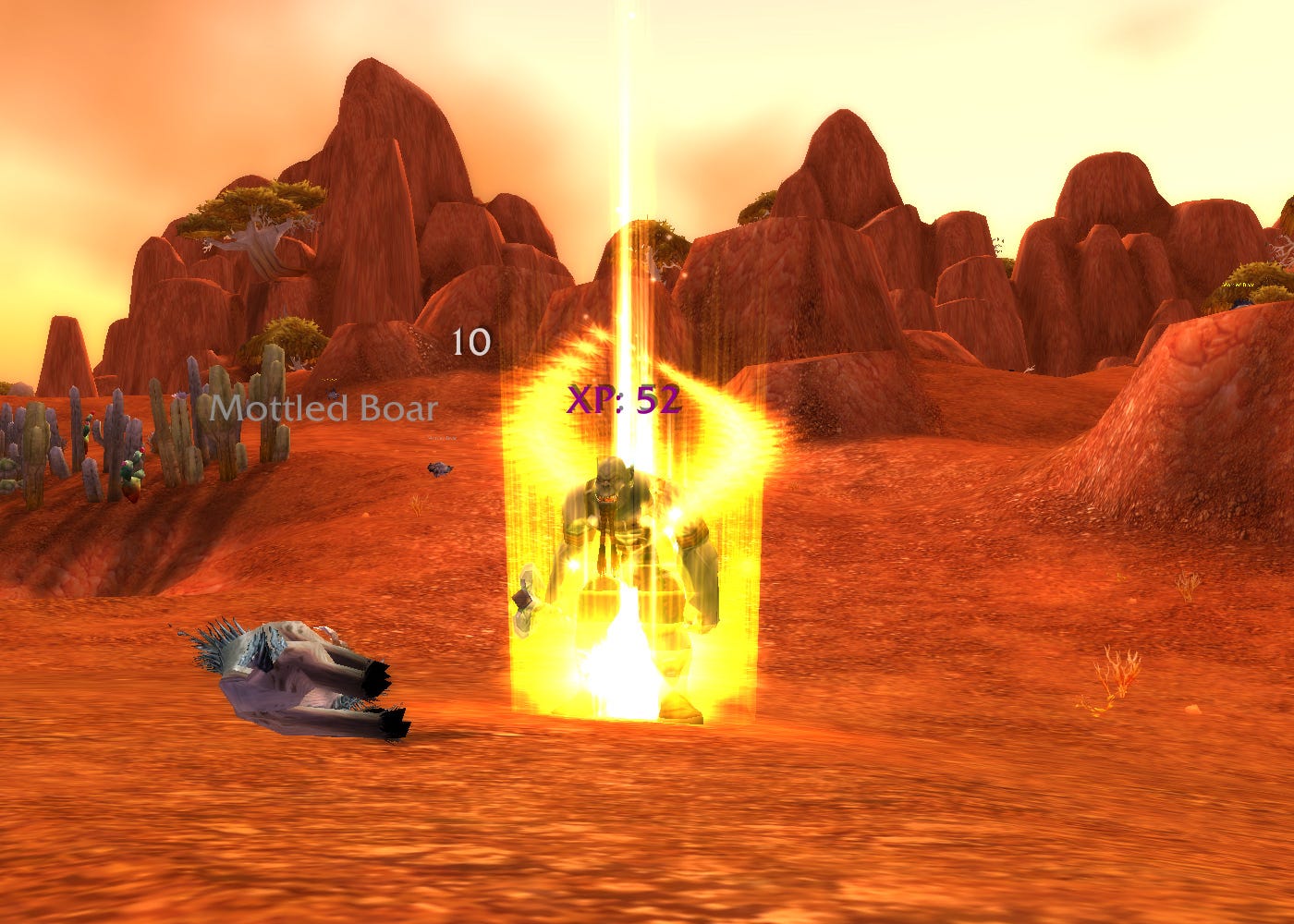
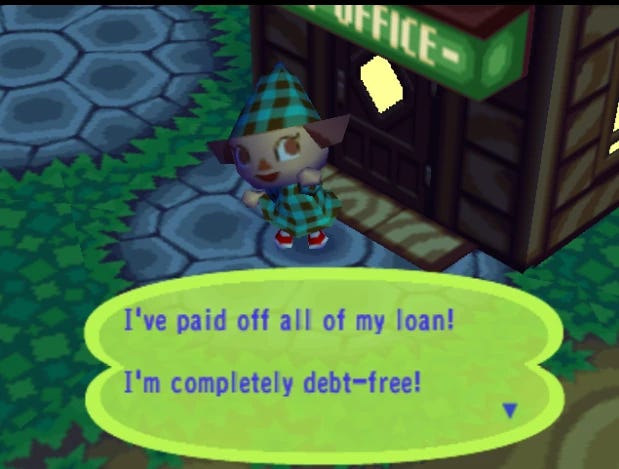
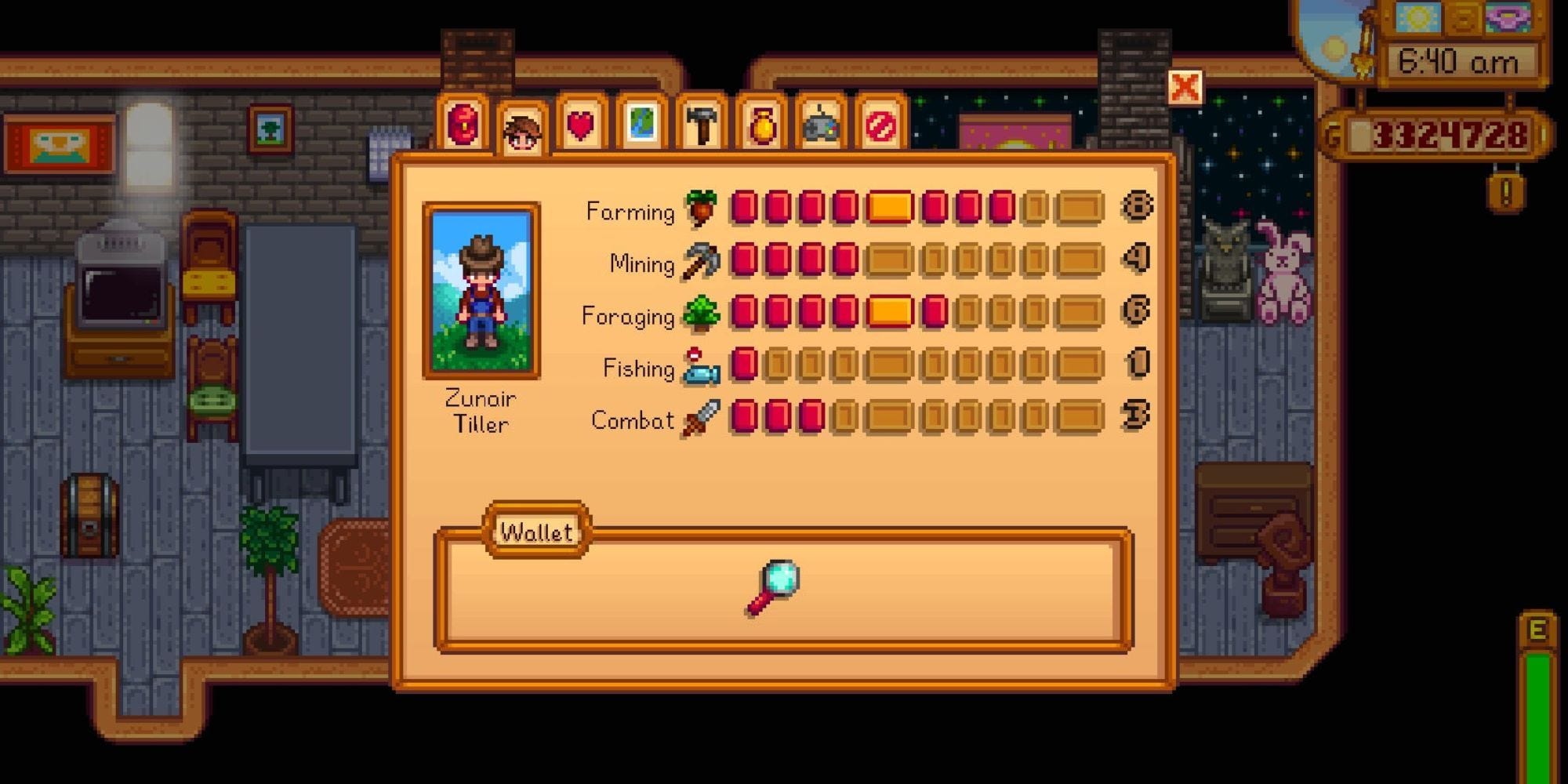
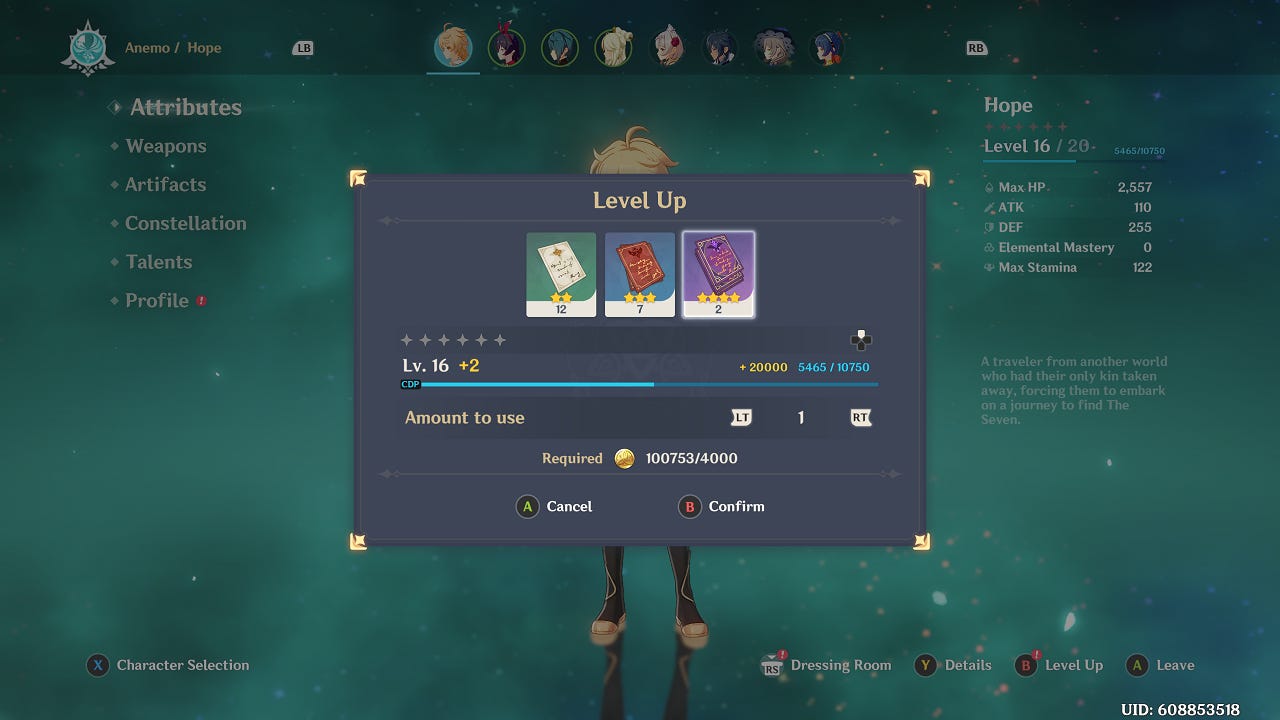
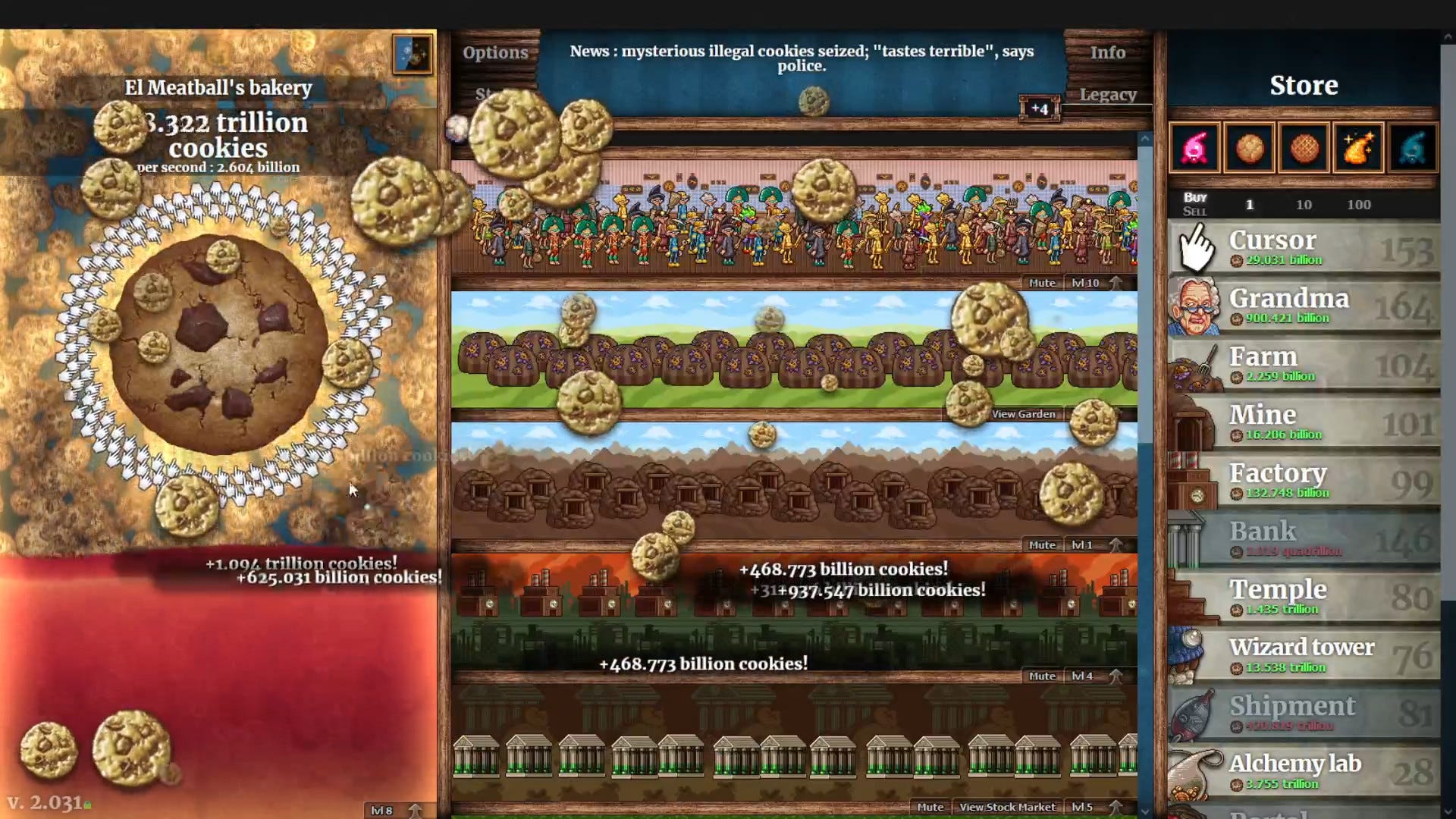
The slang term “grinding” dates back all the way to the 1800s, meaning tedious, repetitive work (see: “the daily grind”). In gaming discourse it means exactly that: a menial task that can (or must) be repeated; in the case of RuneScape, clicking the same thing over and over for several hours at a time. Since the turn of the century, when the home console throttled the arcade industry in its sleep, games that encourage or even explicitly require grinding have become increasingly common—from town sims like Stardew Valley or Animal Crossing, open-world games like Genshin Impact or World of Warcraft, as well as so-called “incremental” games like Cookie Clicker—and most of these have at one time or another been branded as “second jobs.”
It’s not that they’re stingy—many of them are literally free-to-play. They’re just a bit too profligate when it comes to spending the player’s time. Many of them rely on microtransactions and monthly subscriptions to turn a profit, and so (much like for an employer) the goal is to keep you at your desk for as long as possible, to extract as much value as possible.
There are two ways to make a longer game: The first and most obvious being to simply make more game—more art, animation, and code. But these are all extremely expensive, and so many studios resort to simply prolonging what content they can afford, extruding their game through ever-smaller apertures, like a camel that’s been liquified and shot through the eye of a no-longer-proverbial needle.
This results in a very long camel, stringy and thin, not difficult to chew but certainly monotonous, and the best method for masticating the meat of a second-job game is usually with intensive bouts of grinding—for example, catching and pawning hundreds of tarantulas to pay off your mortgage in Animal Crossing, or clicking crabs for fifteen hours to raise your Attack skill in RuneScape.
Non-game-playing and/or mentally well readers may now be wondering: why would anyone do this? Who are these games for? It may seem like an error in their design, but the bug is in the wetware, in the spongey, tangled mess between our ears. Second-job games are popular precisely because they’re so repetitive, because every minute you’re glued to a screen hooking virtual eels, you’re also inching towards some concrete numerical goal—making “number go up,” as the saying goes, and this turns out to be an excellent way to hijack the human brain.
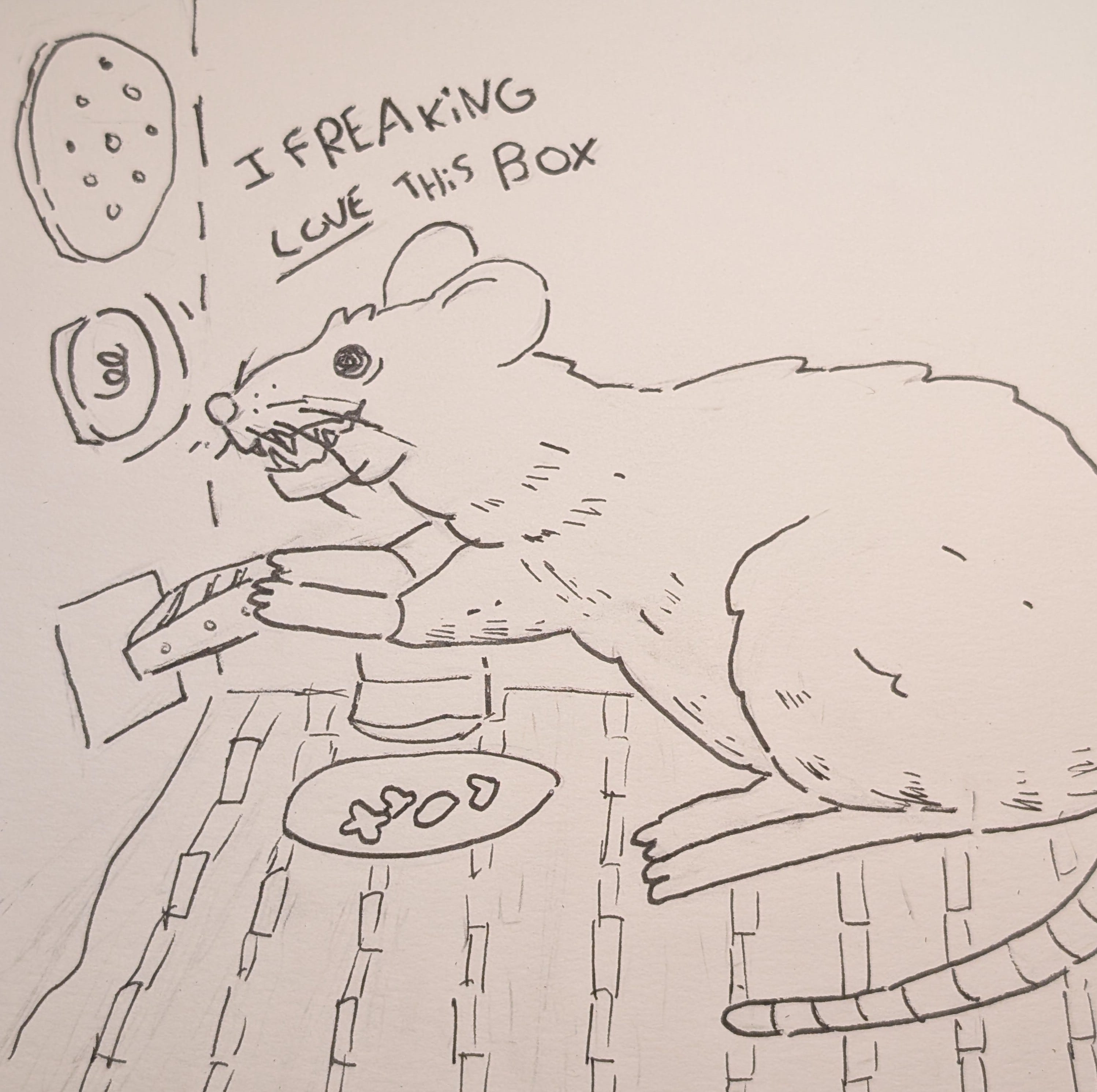
As hundreds of online commentators have written before me, these games operate a bit like virtual Skinner boxes—press a lever, get a treat; click a goblin, gain a level. As you play, more milestones are placed out in front of you, only further and further apart—using what in behavioral psychology they call a progressive ratio (PR) reward schedule—creating a game that is functionally endless, and for many, endlessly compulsive.
We love second-job games because they offer the sense of agency that our real lives so often lack. Every in-game action has a tangible (if marginal) impact; nothing is totally pointless by the game’s internal logic. By contrast, in our actual work and relationships, we often feel powerless. All our efforts may seem (or indeed actually be) futile.
My own gaming addiction started soon after I transferred to a much larger middle school. Borderline overweight and oblivious to just about every social norm, I was an easy target for bullies, and to everyone else, simply beneath notice. Games were the bandaid that I stretched over the void of purpose and progress in my actual life. They gave me a set of rules that, if followed astutely, guaranteed success. The non-virtual world makes us no such promises.
But when did finally manage to pull myself out of addiction and into the real, I soon discovered—even without a game designer leading me by the nose—that there were naturally occurring Skinner boxes littered all over my ecosystem. You could just as easily get addicted to improving your health, amplifying your beauty, or leveling up your GPA.
The most obvious analog to a second-job game is, of course, our actual jobs. Particularly for members of the professional-managerial class, there are lots of numbers you can grind up at work—salary, bonus, position on the promotional ladder, number of employees, or papers published. Even for non-salaried workers, if your budget contains even the smallest margin for saving, you can theoretically always increase the number of dollars you have.
Perhaps, in part, it’s this very numericity that makes money such a popular fixation, even long after we’ve satisfied our basic needs. Two of my best friends are siblings, and both have told me (in jest) what their father, a successful business owner, told them (in earnest) about money when they were growing up: that “money is a way of keeping score,” how you know who’s winning and losing in the game of life.
He’d be perfectly right if we were talking about the board game—still, I’ve met plenty of others who seem to feel similarly, though few who are similarly honest. In my twenties, I’d sometimes ask people: “How much money would you need to feel like you have ‘enough?’ What’s your threshold salary, after which you’d stop trying to make more, and focus your attention on something else?”
The answer was almost invariably about twice as much money as they made when I asked. It didn’t matter what their starting number was—if they made $75,000, they’d be satisfied with about $150,000; if they made $250,000, then maybe at $500,000, when they could afford a house in the mountains and maybe a cottage on the beach, they’d consider slowing down.4 Whenever we hit our target, we set up another further away, using the same reward schedule that game designers use to bait their audiences, and Skinner used to torture rats and pigeons.5
It’s easy to go on like this forever. As David Foster Wallace put it in his 2005 commencement speech, “If you worship money and things, if they are where you tap real meaning in life, then you will never have enough.” And if you’re disciplined enough to stick to your target number, to smash the STOP button on the hedonic treadmill and clamber off, you’re almost guaranteed to replace money with some new object of worship—beauty, health, power, intelligence, whatever—some new obsession that, as Wallace puts it, “will eat you alive”.
Whatever the goal is—a promotion, a personal record, a new possession—you say, “To feel complete I need N.” You get N, but you still don’t feel complete. Now you say: “To feel complete, I need N+1”. Your desire becomes an endless series that goes from N+1, N+2, N+3, and beyond. Once attained, each number becomes finite and dead. The horizon recedes, and to feel the sting of purpose again, you project your desire out even further. Your life becomes a straight line of “and then, and then, and then,” stretching out into a vacuous infinity of futile repetition, a perpetual flight from your boredom in the present.
How do we stop our desire from eating us alive? The traditional remedy, prescribed by gurus and messiahs throughout history, is to tear it out root and branch. From the Buddha (“Desire is the bane of mankind”) to Jesus (“You cannot serve both God and money”), we’re told to look past our ephemeral, some say illusory existence, break free from the ego-driven cycle of goal → effort → reward, and redirect our longing towards the divine.
I was born to a community of mystics and spiritual seekers, so I’m being completely serious when I say I’ve been hearing this wisdom since I was born. I have a lot of respect for it. I’ve also decided it’s not for me.
My issue is twofold: first, I’m unconvinced that the material world is an illusion, that there is some other reality more real than this, or something else after this. As best I can judge, this is all we get, and I’m okay with that. I like the world, and I enjoy striving. I find the loop of setting goals and hitting them to be genuinely rewarding, especially if I can divorce it from a strong attachment to a particular outcome. The problem is that after meeting my basic needs for security, health, and sociability, I tend to find most of the usual targets for ambition (real or virtual) to be spiritually hollow.
I’ve spent much of my adult life searching for a third option—neither the ceaseless, nihilistic cycle of attainment, nor the transcendental search for enlightenment. One possible alternative is that instead of striving inward (for ourselves), or upward (to God), we can reach outward, to nature, art, and our fellow human beings.
This is the core argument of Iris Murdoch’s book, The Sovereignty of Good. It’s a bit of a polemic, a scholarly declaration of war against the existentialist and utilitarian thinkers who dominated philosophy at the time she was writing. She goes to great lengths to expose the shallowness and circularity of their ideas, the narcissistic rot that she believed was inextricable from their ethics.
To an existentialist, there is no meaning to life except what an individual decides. All morality is relative, and so we each choose for ourselves what words like “good” and “bad” mean, and what a “well-lived life” looks like. This may seem reasonable (assuming you don’t believe in a creator, and so “good” and “bad” cannot be simply reduced to “what God said”) until you consider how a moral system based on personal preference quickly devolves into solipsism. If the individual, the main character, determines what does and doesn’t matter, then they are the origin point of “mattering” itself; they become, in effect, the only thing that matters.
I won’t get too bogged down in her critique, but suffice it to say that Murdoch vehemently disagrees. She offers an alternative framework, wherein human beings are still the makers of meaning and morality, but we do not make make them as we choose. There is, she thinks, a real, definite thing out there called “Good,” which exists between us rather than locked up in our individual skulls, and that we should dedicate our lives to the project of “apprehending” it. She calls this act of apprehension “unselfing,” by which she just means attending closely to the world as it actually is.
The easiest way to practice unselfing is by immersing yourself in the various sub-concepts that comprise Good, like Truth and Beauty. These can be found in abundance in the natural world, as well as in what Murdoch calls “great art”. Making art may seem as first like yet another type of narcissistic self-aggrandizement—and often it is, just one more method by which we scrabble towards status and money—but as Murdoch writes: “the great artists reveal the detail of the world,” and their work “invites unpossessive contemplation and resists absorption into the selfish dream life of the consciousness.”
But the most important component of unselfing is care. Most everyday acts of care—sweeping floors, washing dishes, making beds—are as mind-numbingly repetitive as the dullest games and most menial jobs. You can “bot” these chores, outsourcing them to nannies, housecleaners, and caterers, but this negates their most glorifying byproduct. To Murdoch, caring is not so much about “acting nicely” or “fulfilling duties”, as it is about the painful internal struggle to see other people clearly.
Only through direct, physical participation in care do we start to loosen our grip on our own centrality, to understand that other people aren’t NPCs, not a means to an end, but worthy ends in themselves. Only then can we come to know Love—not selfish love, that desires another as an object, as one more feather in the cap of the self—love of another as an other. “Love” Murdoch writes, “is the extremely difficult realisation that something other than oneself is real.”
When we understand these things fully—Truth, Beauty, Love, and then Good—we won’t be able to help ourselves; Goodness will flow from us as if by instinct. “If I attend properly I will have no choices,” she writes, “and this is the ultimate condition to be aimed at.” To apprehend Good in its totality is to be wholly obedient to reality itself.
Not that we’ll ever be finished. When we look at nature, art, and our fellow creatures, we find an inexhaustible depth of reality. Over time, the ego inevitably reasserts itself. “Moral tasks are characteristically endless” Murdoch writes, “not only because […] our efforts are imperfect, but also because as we move and as we look our concepts themselves are changing.” Goodness—like the pursuit of wealth, intelligence, and power—has no terminus, no final destination.
But not all infinities are equal. Unlike the hedonic treadmill or the Skinner box, which hold us in a vise of permanent longing, Murdoch’s apprehension is more demanding—requiring curiosity, openness, and endurance—but also infinitely more generous. There’s no “reward schedule,” no searching for a destination that we’ll never find. Each act of Goodness is its own completion; every moment we can see clearly and give freely, we’ve already arrived.
I am not a particularly good person, capital G or otherwise. Despite my ambivalence toward overt, self-oriented ambition, just about everything I do is selfish anyway. Most of the time—like everybody else—I’m operating on autopilot, practically a bot myself, all volition purely instinctual, programmed in by nature or nurture. Whenever I do wake up and realize how I’ve been living, I am often repulsed, nowhere close to reaching my own standard for goodness; and if Murdoch were alive, I’m sure she’d agree.6
But why do I care? I don’t even subscribe to Murdoch’s moral realism. I can’t convince myself to believe in Moral Facts, except perhaps in a crude statistical sense. For example, if 90% of people say that murder is wrong, maybe we just round up and say it’s axiomatically bad. But considering that the majority of Americans still support the death penalty, and how many of us cheered after the recent spate of politically-motivated killings, the actual percentage is surely not so high. Murder, perhaps, not so bad after all.7
But even if I don’t follow her metaphysics, I still think Murdoch offers a workable answer to my question—i.e. what do I do with my desire. Given that I’ve rejected the obverse—denial of desire, escape from samsara—all I can think to do is run in the opposite direction, to desire realness itself, and whenever a moment of consciousness arrives, use it to plumb the depths of my experience, to love and care for others, and slowly shrink that inexhaustible distance between myself and everything else.
The years I incinerated playing online roleplaying games were some of the worst of my life. My window into reality was smaller and more blinkered than ever before or since, my understanding of right and wrong profoundly distorted. I torched countless hours on a goal that was fundamentally meaningless.
Not, perhaps, from an existentialist point of view—at the time, I certainly found it all very rewarding, each new level I gained firing a fresh spike of dopamine into my brain. You must imagine Sisyphus very happy indeed. But in all of those hours, I built nothing real, learned nothing true. I just clicked, consumed by my longing for larger numbers.
Actually, I did learn one thing: You can always choose a different game to play. If we’re destined to grind ourselves up on some hopeless errand, we may as well find something worthy of our sacrifice. No matter what we worship, we’ll never have enough—so why not worship something where “never having enough” would be a good thing?
Why not worship truth, beauty, love, and goodness itself?
Events
We don’t do those anymore
But fr: no Potluck in December
Perhaps on January 10 or 17
Hope you’re having a lovely winter.
Oh, and if you’re wondering where the second part of the self-help screed is, I’ve written about 8,000 words, and thrown away nearly 7,500. I’ll finish eventually, but don’t hold your breath!

It’s actually N+1 purchases
It’s not all bad—the quests are fantastic, actually, with excellent puzzle design and writing that is truly hilarious in a Very British sort of way (i.e. my favorite way). It’s a shame that nearly everyone breezes past them with guides (including me in middle school).
I am also a big advocate for deleting hours of your life when you’re having a horrible time and want to make the days pass more quickly, e.g. when you’re extremely ill.
Curious if they realized that their own jobs might be part of that percentage.
I leave it to the philosophers to debate whether a more complex computer program (for instance, a hypothetical sentient AI) could be said to play a game.
There are certainly good reasons to want more money beyond the simple drive for accumulation, especially in major cities, where housing affordability is extremely low. Still, I think it’s also safe to say that our expectations for what a “normal” level of consumption looks like have gotten thoroughly out of hand.
Real psych-heads know that Skinner trained his animals using a “variable ratio” (VR) reward schedule—press a lever, sometimes get a treat—which acts more like a slot machine than an RPG leveling system. William Hodos developed the PR schedule (and tested it using similar methods), but we don’t call ‘em Hodos boxes, so...
Wallace is less judgmental; he writes: “The insidious thing about these forms of worship [money, beauty, power, etc.] is not that they’re evil or sinful, it’s that they’re unconscious.”
If you’re curious what sort of moral system I would stamp with my (highly-coveted) seal of approval, it would probably be close to the one explicated in this essay by Lionel Page.